Containerization
The development and deployment of applications have evolved over a period of time. A paradigm shift has occurred in building the applications by breaking down the functionalities into smaller microservices and designing the applications as cloud-native applications to run each service as separate unit on containers.
A container contains an operating system, package library and environment variable, etc. Thus, it is ready to deploy/port to any container-based environment. These are used as a container runtime platform for Docker, Containerd, Cri-o, etc. The App layer has packages code and dependencies . It is lightweight, portable and provides isolation and container runtime.
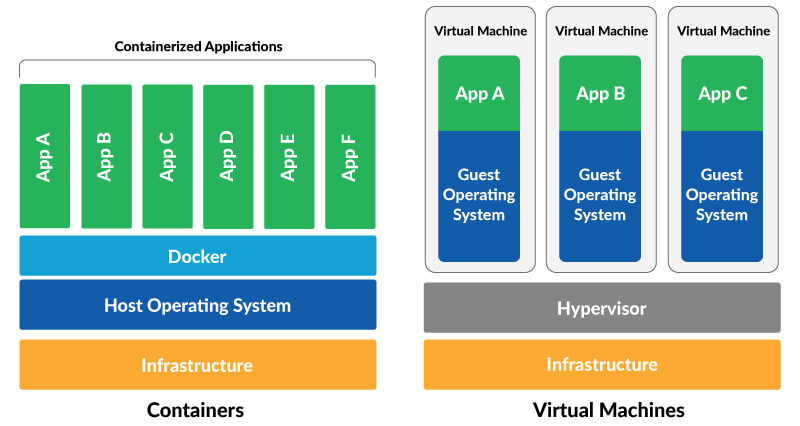
Fig 1: Containers versus Virtual Machines
Why do we need Container Orchestration?
Challenges in Container Management
Managing clusters is a bit complex, especially achieving high availability, maintaining the health of pods, zero downtime upgrades, etc. Operational complexities such as creating cluster setup, adding and removing node to cluster, etc. Also, an additional further effort will be required to ensure the monitoring and security of the clusters. The on-prem cluster setup and its maintenance costs are comparatively higher.
Container Orchestration
The container orchestration tool performs/automates multiple tasks such as managing the container, configuration of the container and application, scheduling the container, deployment to a worker node,
self-healing, scaling the application container, monitoring container health and DevOps help to automation for the pipeline.
Kubernetes
Kubernetes is the de-facto standard for a container orchestration tool for provisioning and deployment of the containers. Kubernetes is a market-leading tool for container orchestration, and it is also portable as well as extensible to deploy any containerized application to any cloud. Kubernetes supports the Open Containers Initiative (OCI) runtime standard for container runtime platforms.
Kubernetes cluster deployment is a bit complex compared to the usual way of monolithic deployment. Container orchestration is not recommended for a non-scalable, simple application with minimal container deployment; it may increase the complexities during application deployment.
Azure has developed a top-of-the-line Kubernetes orchestration platform, the Azure Kubernetes Service; it is
well-integrated with Azure services (PaaS/IaaS) and DevOps services. The developer focuses mainly on the development of applications, not on cluster management activities. AKS would decrease the number of administrative tasks for cluster management.
Features of Azure Kubernetes Service (AKS)
Here, we will cover the major features included in Azure Kubernetes Service, which will help you in terms of scalability, performance, security, governance etc., during container deployment and management.
Managed AKS:
- AKS simplifies the creation and delivery of cloud-native/container-based applications, which falls between the IaaS and PaaS level. Built-in features enable less administrative work while providing an option for deploying the serverless Azure function to the AKS cluster.
- The AKS Master Node (API Server, Scheduler, Controller Manager, etc.) is completely managed by Microsoft
- AKS supports both Windows and Linux based container deployment
Networking:
- AKS is deployed into a virtual network subnet with several Azure network services enabled
- VNET is completely supported by AKS
- Azure Load Balancer – Secures AKS cluster environment in a private cluster and balances traffic within a virtual network
- Ingress controller – For reverse-proxy feature, routing traffic, etc.
- Network model – Based on the network model requirement for IP address pace, pod communication, Azure network policy and virtual notes, you can pick Kubernetes or Azure CNI (recommended by Azure CNI)
Storage:
- Azure Kubernetes supports multiple storage solutions (persistent volume) such as Azure Disk Storage and Azure File for concurrent data access, NFA and Azure NetApp Files
Scalability:
- Azure Kubernetes Service (AKS) is a leading Kubernetes managed solution
- It quickly helps to spin-up new clusters and it is very easy to maintain and run the clusters
- AKS completely supports a container’s scalability
Hybrid Cloud:
- To support the hybrid cloud deployment model, Kubernetes uses Azure Arc and Azure Stack to provide a more stable and faster environment
Azure DevOps:
- DevOps provides an agile board, repository, AKS container application pipeline and release
- Azure Monitor and AKS container monitoring provide information for monitoring containers such as processor, memory, log, etc.
Security:
- Key security options are available to secure the AKS environment. AKS supports Azure Active Directory (AD), Service Principal and Role-Based Access Control (RBAC) authentication.
- Azure Application Gateway configuration option in Ingress
- Images are scanned using third-party tools and these scanned images are securely stored in the container registry
- Setup network policy to secure communication paths between namespaces and nodes
- Restricted access to the configuration of VNET, whitelist and blocklist in AKS
- Compliance with certifications such as SOC, HIPAA, PCI, etc.
Cost:
- The Azure Master node is fully run by Microsoft for free
- AKS pricing models are VM Node and Scale Set
Availability:
- AKS is a highly available (99.5% for API Server and VM node 99.9%**), secure, reliable and managed Kubernetes service from Microsoft Azure
Governance:
- Azure security center and Azure advisory service provides recommendations on governance, stability, best practices and suggestions on improving the AKS cluster
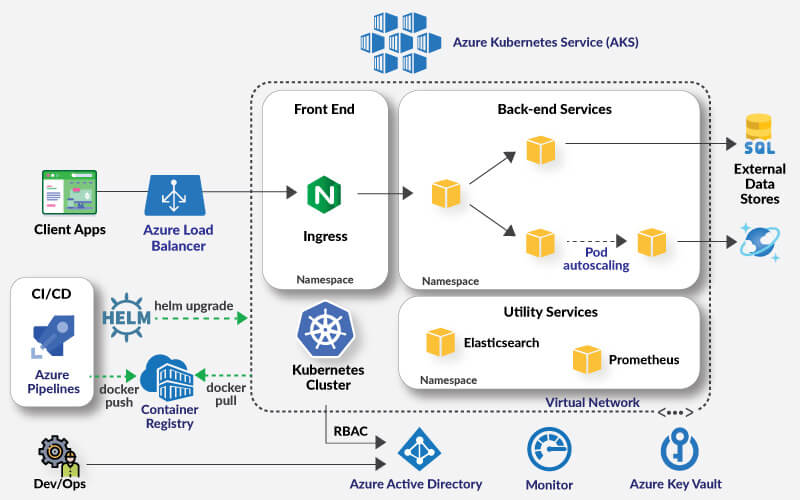
Fig 2: A reference implementation of AKS architecture
AKS is the best option for deploying a cloud-ready and microservice-based cloud-native application. It also supports the containerization of monolithic applications.
Correlation between AKS and our Proprietary Code Transformation Product
AmazeTM for Applications is a highly customizable cloud replatforming product primarily designed for Java and C# applications, which enables application transformation to cloud seamlessly without any changes to your application’s existing business functionality. It can decisively review your existing workloads, perform code changes to remove and change code inhibitors for containerization, de-couples application, and then re-platform your application servers and databases by utilizing maximum automation to save upon manual efforts. Below are the business benefits it can deliver within 4-6 weeks along with scalability and ‘future-ready flexibility’ while saving on excessive costs, maintenance-time and upgrades.
- Reduce your application TCO by up to 75%
- Reduce transformation cost by up to 60%
- Reduce implementation time by up to 50%
AmazeTM for Applications completely supports the deployment of containerized applications to AKS. It also provides fast macroservice creation for enterprise-grade applications and enable the DevOps to AKS cluster. Thus, AKS is a cost-effective solution for container-based deployment.
Eager to know what is the actual TCO savings you can realize by leveraging AmazeTM for Applications?
Our TCO calculator will do it for you in just a few clicks.
Why TCO calculator?
- Compares TCO instantly between your on-premise applications and its cloud replatformed version
- Generates a detailed report in just a few minutes
- Simple and quick to use
So, let’s check how AmazeTM for Applications can save you big on cloud.
Reference